(This article was published in the Spring 2026 edition of Ursulines Alive.)
By Dan Heckel
Sister Angela Fitzpatrick’s move from Mission, Kan., to Maple Mount, Ky., on Jan. 12, 2026, was nothing out of the ordinary, except for what it signified – for the first time in 131 years, there were no Ursuline Sisters serving in Kansas.
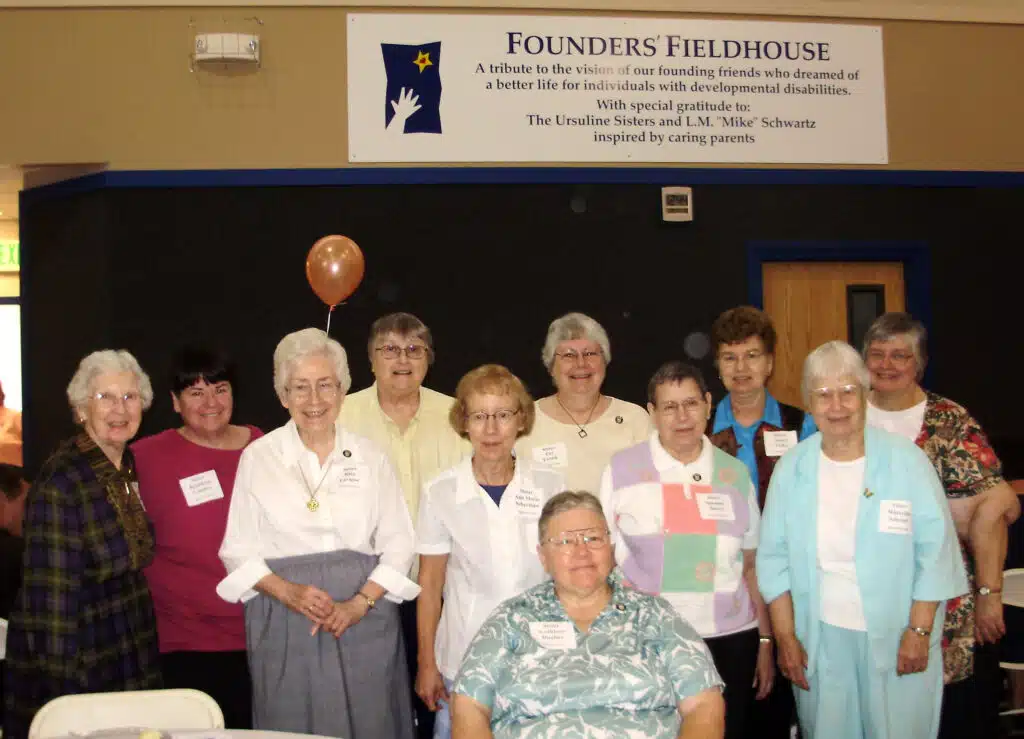
The Ursuline Sisters of Paola, Kan., merged with Mount Saint Joseph in 2008. While some of the Sisters moved to Maple Mount the following year, several have continued to serve in the Sunflower state, where Ursulines first arrived in 1895.
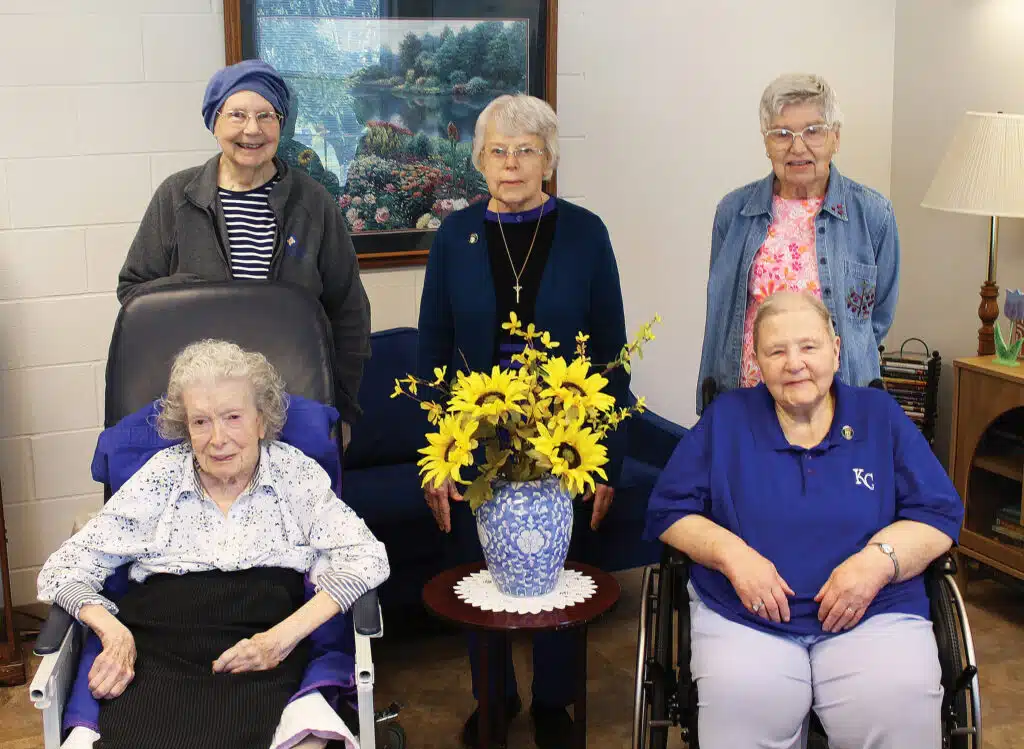
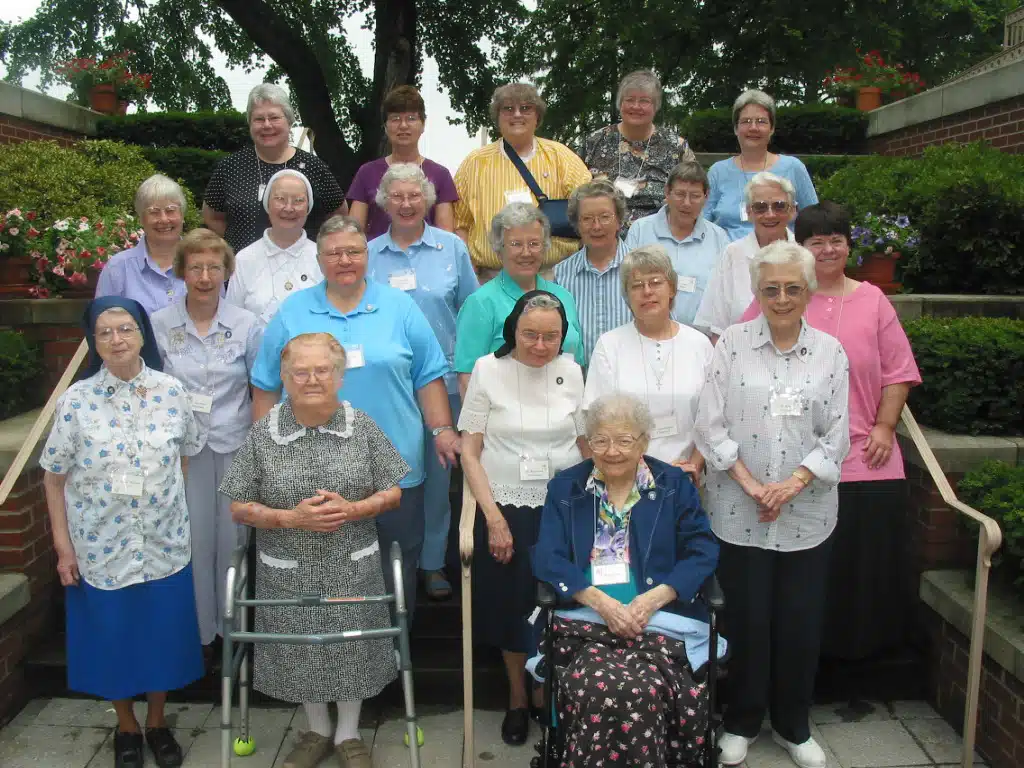
While a physical Ursuline presence is no longer in Kansas, the five remaining Paola Sisters and some prominent Kansans all agree that the Ursuline legacy will live on for many years.
“Our legacy is certainly education,” Sister Pat Lynch said. “That was the main ministry. We taught in a lot of Catholic schools, but also in some public schools in Scipio and Wea. You can’t go anywhere in a Catholic parish without being told, ‘My aunt had Ursuline Sisters in school.’”
“The pioneer spirit is what comes to mind about our legacy,” Sister Kathleen Dueber said. “We started Lakemary Center. We started the cultural center in Paola. We were always looking ahead to see what could be done.”
“I feel that the most important part of the legacy of the Paola Ursulines is 120 years of providing faith formation for Catholic school children and vacation bible classes,” Sister Jane Falke said. “We taught them the Catholic faith and prepared them for the sacraments. Along with that we taught them the regular school classes so that they could become productive members of society.”
For Sister Grace Swift, the longest serving former Paola Sister who will turn 99 this August, the legacy is the education the Sisters provided in both small-town and urban elementary schools, and in high school.
“We certainly had a lot of grade schools in little rural Kansas towns,” she said. “I taught a lot of kids in Paola and Garnett over several years.”
Sister Angela believes the people of Kansas – especially the Ursuline Associates there who she stays connected with – will help to keep the Ursuline legacy alive.
“I’m sure the Ursuline Sisters won’t be forgotten.”
Bishop Miege keeps Ursuline focus
The Ursuline Sisters arrived in Kansas in 1895 at the invitation of Bishop Louis Mary Fink, of the Diocese of Leavenworth, and opened Ursuline Academy the following year. The Sisters taught at Ursuline Academy until it closed in 1971. In 1902, Holy Trinity Church in Paola completed a school named St. Patrick, and the following year, Ursuline Sisters of Paola began teaching there, which they continued to do until 1999. The name was changed to Holy Trinity School in the 1950s.
Throughout the 20th century, Paola Sisters served in rural schools and those in the suburbs of Kansas City, and several of those schools are still in operation. In 1929, they began serving at St. Agnes School in the suburb of Roeland Park and taught there for 63 years. The Sisters began St. Agnes High School in 1947, which remained open until the Archdiocese of Kansas City, Kan., opened Bishop Miege High School in 1958. As an homage to St. Agnes – which was next door – the nickname for the Bishop Miege sports teams is Stags, an acronym of “St. Ag.”
There is no school in Kansas doing more to keep the Ursuline legacy alive than Bishop Miege. Joe Passantino served 29 years as principal and then president at Bishop Miege before retiring in 2016.
“The Ursulines who I had the privilege to work with had such grace, such a spirituality that you wanted to follow,” Passantino said. “The biggest challenge we face with our lay people is, ‘How do you keep that going?’ Probably half of our staff never worked with an Ursuline. But for those who did, the lay people have the witness of the Ursulines and want to carry that on.”
When Passantino arrived at the school in 1987, he worked with three Ursuline Sisters – Sister Martina Rockers, Sister Mildred “Millie” Berdelle, and Sister Johanna Huettenmueller.
“When we renovated the school in 2004-05, we named the chapel Saint Angela Merici Chapel,” Passantino said. “There is a beautiful statue of Saint Angela outside the chapel. The Ursuline Award is the highest award students can get after four years.”
Bill Creach is one of the people whose job is to keep that Ursuline legacy going. A 1983 graduate of the school, Creach returned in 1988 as a theology teacher, and now serves as director of Campus Ministry.
“Four to five years ago, the administration team created the Angela Merici Core Values Awards,” Creach said. “The faculty and staff select from their colleagues who should receive it. It’s a great day to celebrate with the faculty and staff.”
Those core values are:
- Emphasis on the individual
- Academic excellence
- Leadership
- Community
- Positive attitude toward change
- Spirituality
- Service
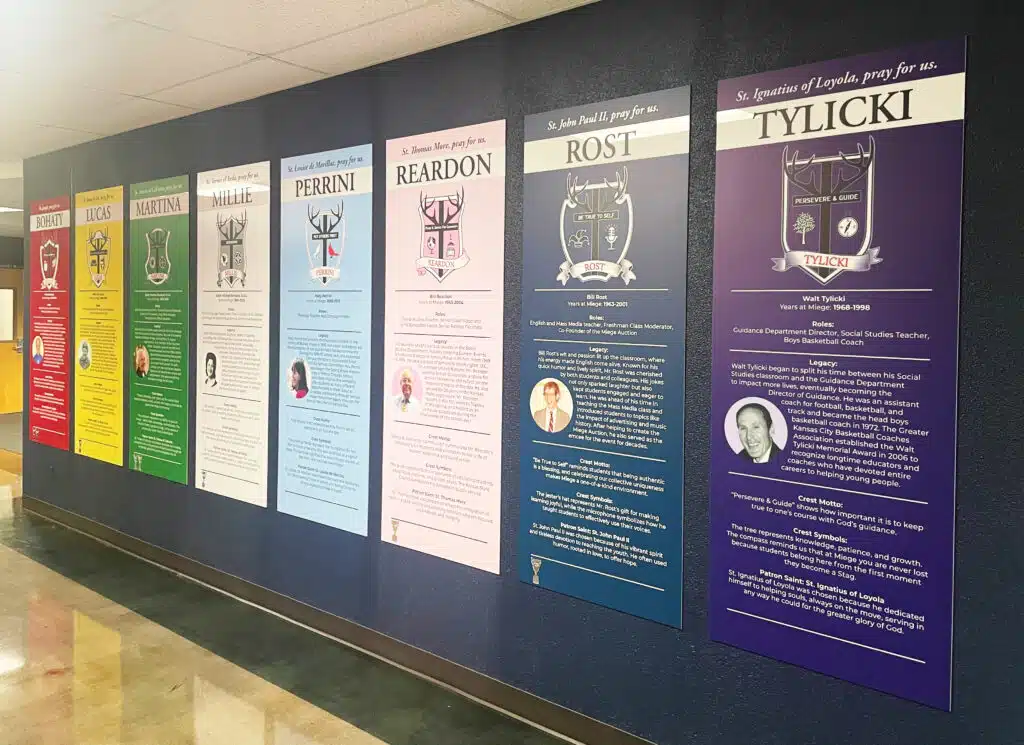
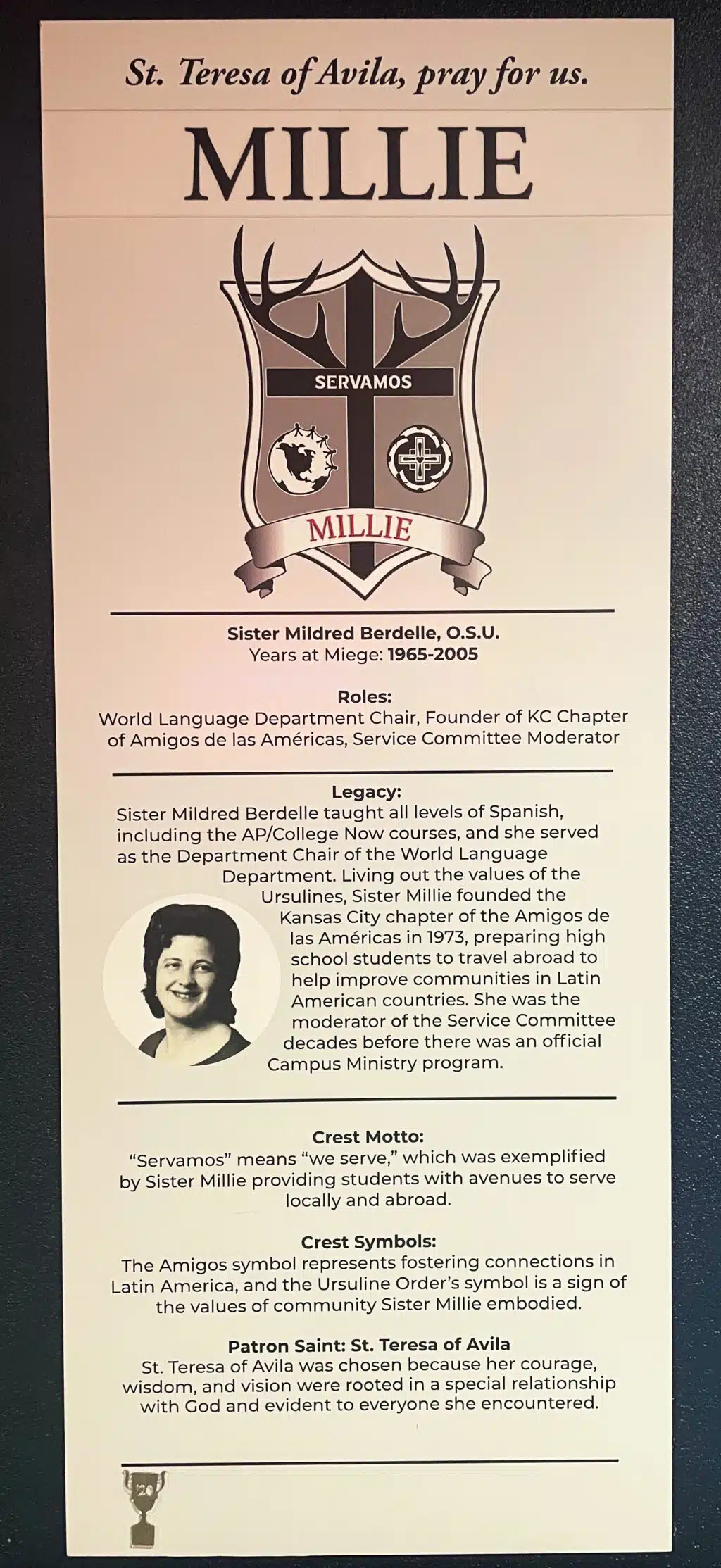
“We selected eight legends, and Sister Millie and Sister Martina are two of the legends,” Creach said. He wrote short biographies of each legend, and the students are broken down into “herds” – like the houses in Harry Potter books. The students for each herd were responsible for developing the crests for each legend based on the bios.
“These plaques are 6-feet high, it’s a great visual reminder,” Creach said. “Students compete for the Ursuline Cup. We have sporting events, video games, and charity drives.”
Sister Millie served at Bishop Miege for 40 years (1965-2005), teaching all levels of Spanish, and served as chairwoman of the World Language Department. She created the Kansas City chapter of the Amigos de las Americas program in 1973, preparing high school students to travel to Latin America to help improve those communities. She was the moderator of the Service Committee decades before there was an official Campus Ministry program.
“We give the Sister Millie Award to an exchange student,” Creach said.
The best leader in the school is given the “Sister Martina Above and Beyond Award,” Creach said.
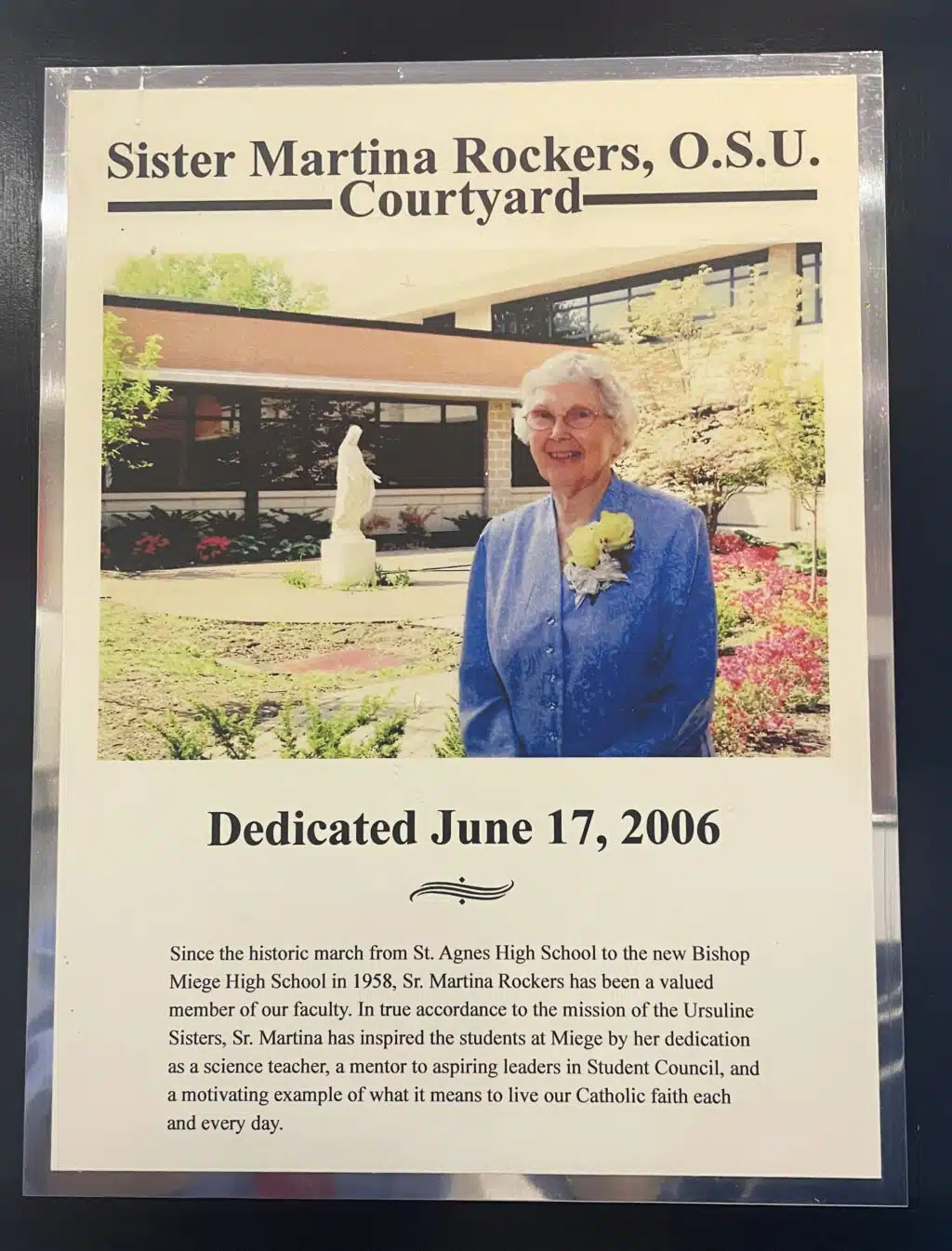
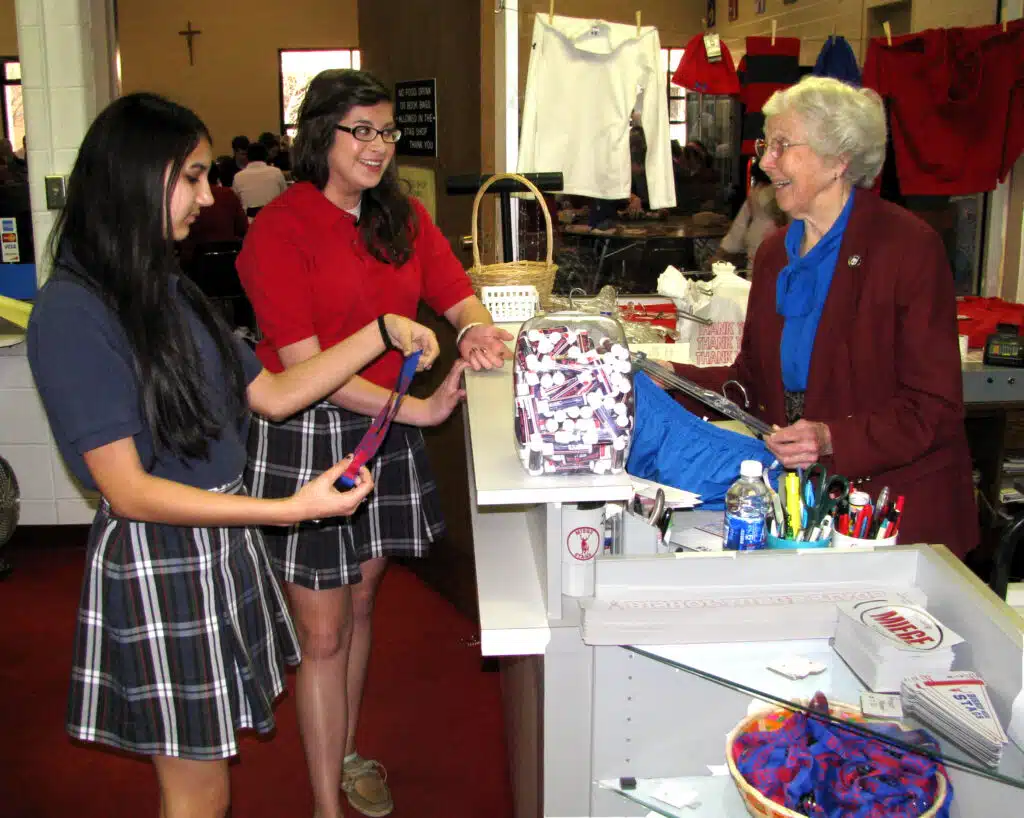
Sister Martina served at Bishop Miege for 60 years, from the day the doors opened in 1958 until her death in 2018. She was chairwoman of the Science Department, Student Council moderator, Dean of Girl Students, the Stag Shop manager and an assistant in the Development office.
“Sister Martina was still working in the school when we created the legends,” Creach said. “She was the living legend in the building. In 2008 we celebrated our 50th year. We took the time capsule that was buried then and had Sister Martina pull out the items. Seeing her face was wonderful.”
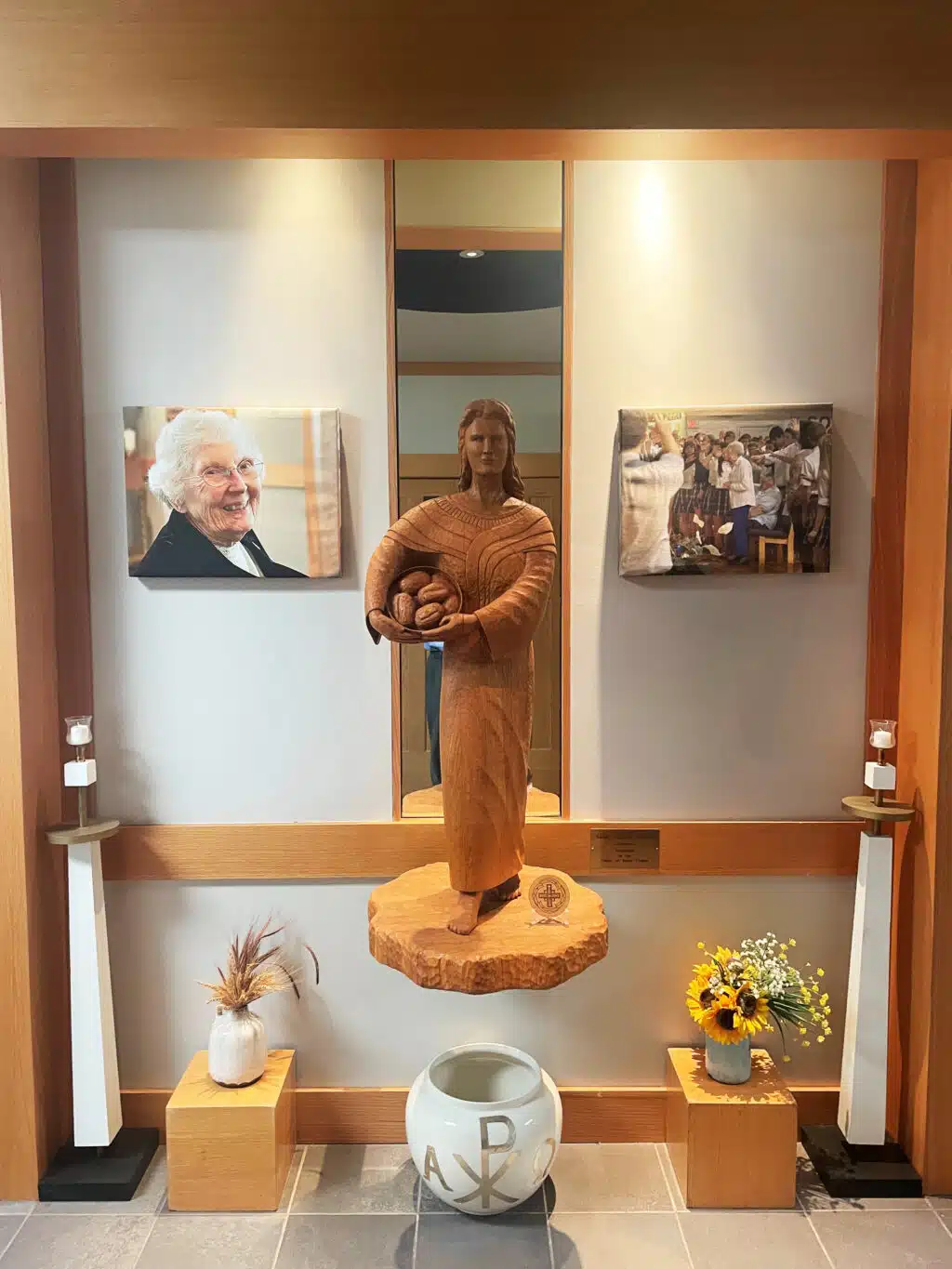
The courtyard at the school was dedicated in Sister Martina’s honor in 2006, and her picture is on the wall outside the Saint Angela Merici Chapel.
Although she died eight years ago, Creach said Sister Martina is still helping at Miege.
“She donated her yearbook collection to the school,” Creach said. “She would cut out clippings of weddings, graduations, etc. We are still using this to find alums.”
Lakemary Center continues the legacy
In 1969, Mother Charles McGrath, superior of the Ursulines of Paola, was looking for a new ministry that supported the Ursuline mission. She found it in response to the parents who wanted education and training for their children with developmental disabilities – programs that were practically nonexistent anywhere in the country.
That year the Ursulines opened the Lakemary Center on 35 acres of property the Sisters owned in Paola. In those early days, to find the money for monthly bond payments, the half dozen Sisters working at Lakemary endorsed their paychecks and then deposited them in the Lakemary account.
“In the early days, many of the kids were placed in our care due to abuse and neglect,” said Kirk Davis, the former president and chief executive officer of Lakemary. “If you accept a child at 5, it means that child is living there until 18. When they were adults, there was no place for them to go. That’s why the Ursulines wanted to start the adult services program, so it could be the students’ forever home. It was for many of them.”
In 1983, when Davis was barely 25 years old, he was hired to develop the adult services program at Lakemary. He stayed at Lakemary for 42 years, until retiring at the end of December 2024. He credits the Ursuline Sisters with the success of Lakemary, which is still going strong today.
“They applied for the first community-based group homes anywhere,” Davis said. “The Sisters were so progressive. They found a way to build community-based group housing that people could afford. It was Section 8 housing, which meant your rent was one-third of your income, and HUD (the Department of Housing and Urban Development) picked up the rest. The only income these residents had was Social Security, so they were living here for $100 a month. The Ursulines covered the rest of the costs of operations and overhead. It became a mission right away. The Sisters cared so much about people with disabilities.”
Davis was moved by the personal connections he was able to build with the Ursulines he worked with. They invited him over for dinner on Friday nights or stopped by his office with encouraging words and a hug.
“They had an educational background,” he said. “They were so intelligent and forward thinking, I knew I could learn a lot from each of them. And I did.”
Davis worked with Ursuline Sisters for 10 to 15 years, but when the last Sister left Lakemary, he vowed not to let their legacy die.
“When we were making decisions, we would ask how the Ursulines would feel about it,” Davis said. “Their legacy gave us the opportunity to continue fundraising. The people who worked alongside the Ursulines never quit talking about them. They would ask, ‘What would Sister Pat think?’ I’d tell them, ‘I know what she would think – do the right thing.’”
Sister Pat Lynch worked at Lakemary as a speech pathologist for seven years, then education coordinator for another five years. She later served on the board of directors.
“Lakemary was on the cutting edge of special education,” Sister Pat said. Initially, the Paola city manager and a local physician met with Mother Charles about enlisting the Ursulines to start a mental health facility, but Mother Charles had other ideas.
“Mother Charles followed Saint Angela’s adaptability, and switched gears to come up with a dream,” Sister Pat said. “I’m so proud of that, it’s grown into such a special place.”
As he neared retirement, Davis wanted to replace the dormitories that were built in 1969 with a 40-bed residence hall and treatment facility for residents age 6 to 21.
“We began a campaign to raise $14 million to $16 million over five years,” Davis said. “We raised the money in less than a year. The Ursulines taught me, ‘Tell your story and people will step up.’” The Lakemary board named the facility the Kirk Davis Center.
There was one more project Davis had in mind before he left.
From his office, Davis could look out on Lake Mary, the three-acre pond where the Ursulines once watered their cattle. One day during the bitter cold winter in 2022, Davis received a report that a child was in the lake. Two employees jumped in to rescue the child, and they all survived, but they ended up in the emergency room.
“I called in my staff and said I can’t bear the thought of that happening again. I decided to drain that pond,” Davis said. “It was hard to do. I consider it on sacred ground. Something didn’t sit right with me. By then, I knew I would be retiring in a few years. I said, ‘The Ursulines are gone, I want to build a park in their legacy.’ I knew it would help a lot of people heal.”
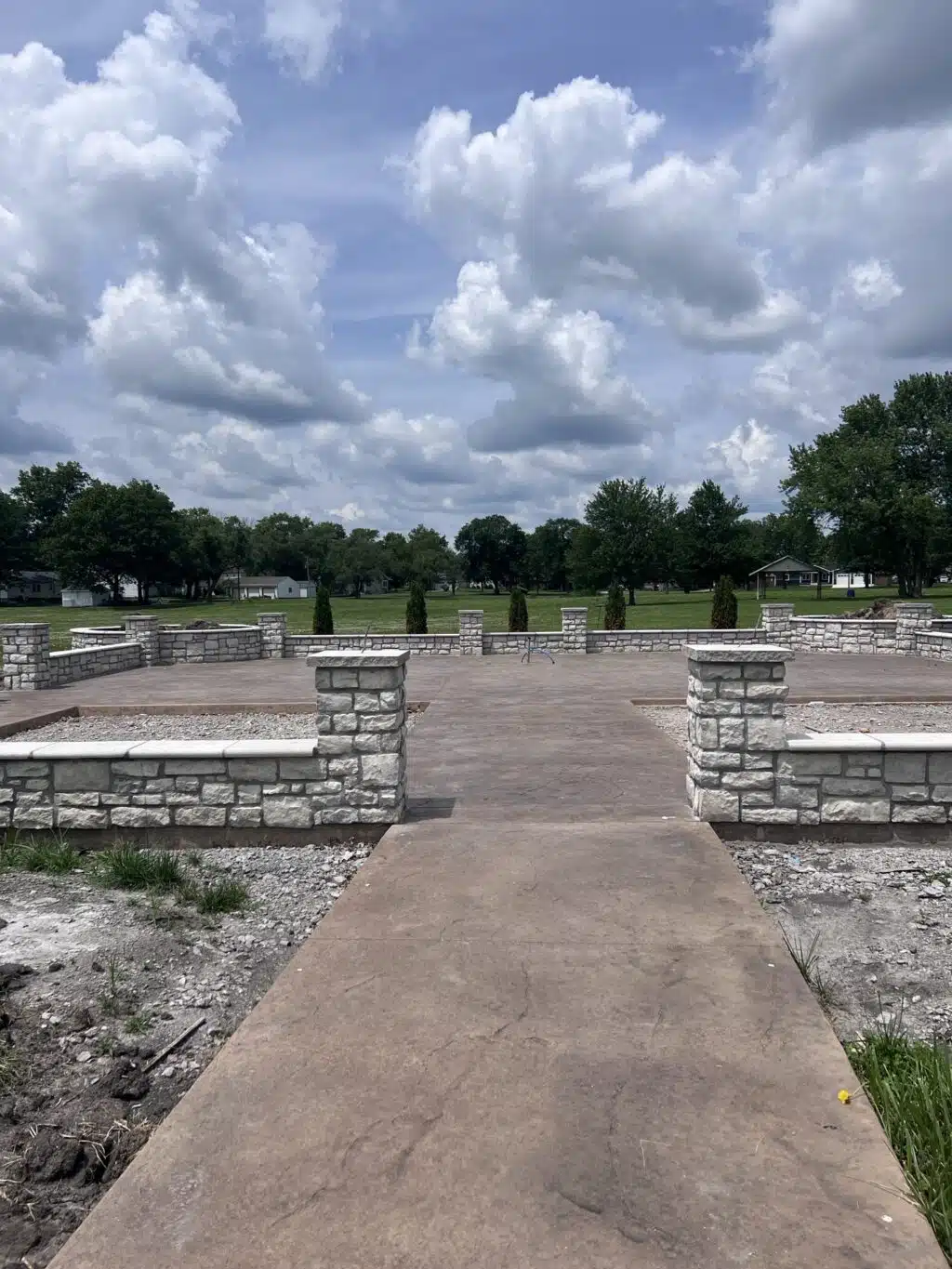
The Ursuline Legacy Park has faced numerous delays, but is scheduled to be dedicated on Sept. 24, 2026. It will feature walking paths, a water feature, an iron gate, benches, a bronze plaque that explains the Ursuline history, and lots of trees.
“I want people to know and feel the incredible love and passion the Ursulines had for the children with developmental disabilities,” Davis said. “They accepted everyone. Without their sacrifices early on, I’m not convinced we would have made it. I could feel God’s presence in the building.”
“The community of Paola loves the Ursulines,” Davis said. “When the (former motherhouse) sold, we all had a heavy heart. I wanted to bring the good feeling back. This park will be open to the public. A lot of people will find comfort in that,” he said. “The Ursuline Sisters’ legacy will continue to give love and hope to the Paola community forever.”
Physical legacies
When the Paola Ursuline community started growing smaller and their buildings were aging, the Sisters followed Jesus’ command to “let nothing be wasted” by repurposing their property to benefit the community.
In 1986, the Sisters donated a building to the city that included their auditorium, which became the Paola Community Center. It housed the Senior Citizens Center – begun by Mother Charles – and the Paola Cultural Center, where concerts, movies and theater shows were available, as well as space for artists.
Both Sister Pat and Sister Kathleen were involved in the Paola Civic Theatre, which was started with townspeople.
“We did variety shows as a fundraiser for Lakemary,” Sister Pat said. “We decided to do The Sound of Music. I was Maria. Several Sisters were in the nun choir. It was a big hit.”
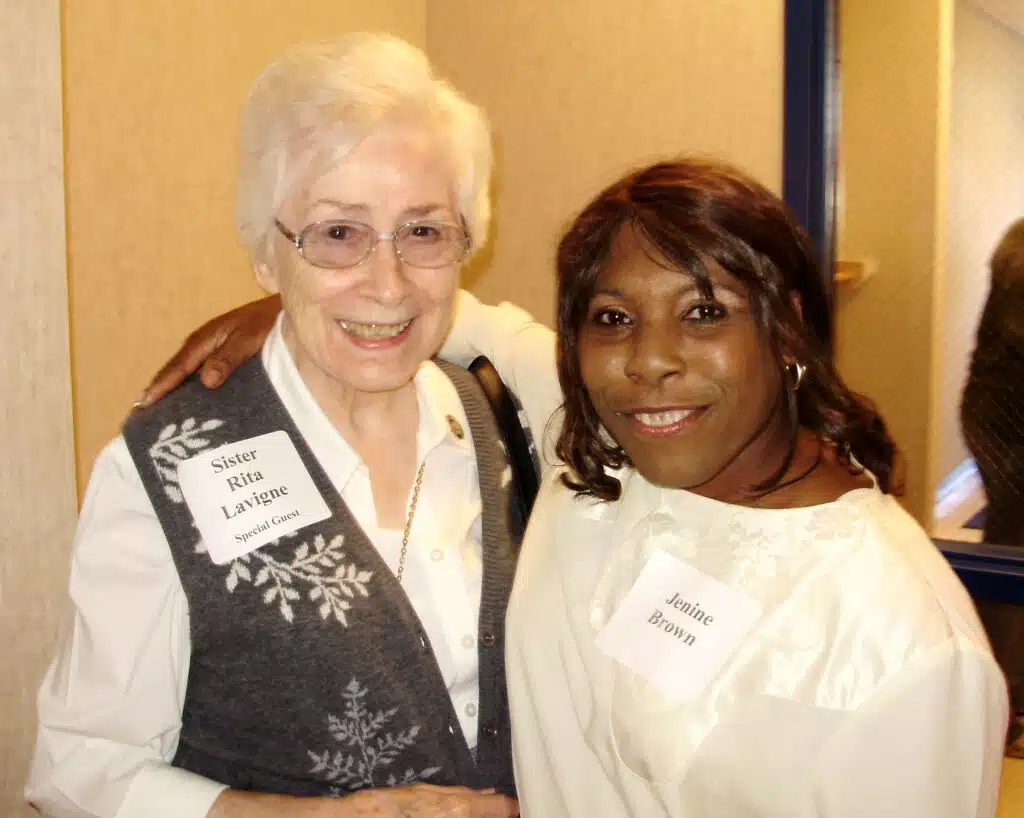
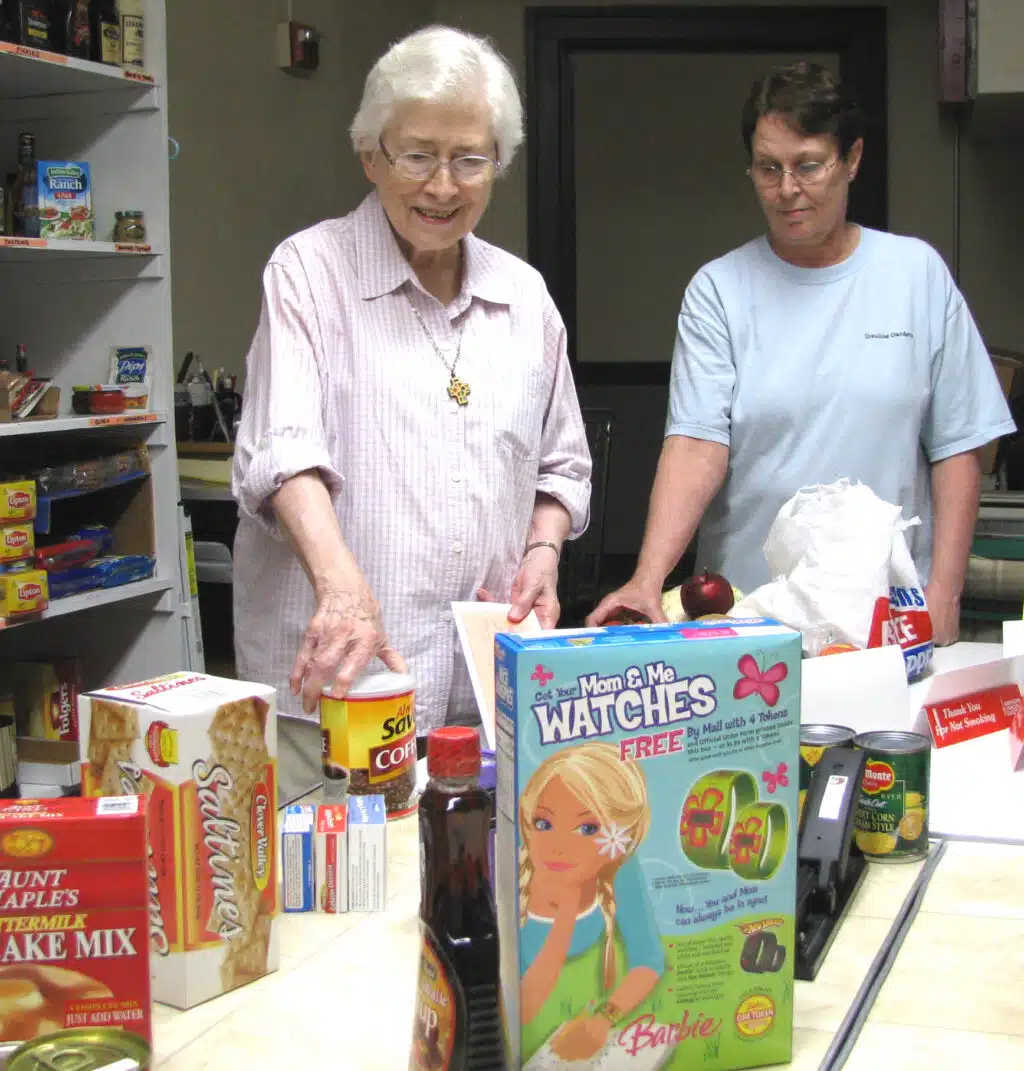
“We did ecumenical work by joining with the Paola churches to provide for the needy,” Sister Jane said. PACA – Paola Association for Church Action – operated a food pantry in the Paola Motherhouse. It was organized for many years by the late Sister Rita Lavigne.
The former Paola Motherhouse is now owned and operated by Arista Recovery, an in-patient addiction treatment center. The Ursuline cemetery remains on the property and will be maintained in perpetuity. Ursuline Associates still visit the cemetery on Memorial Day weekend to decorate the graves and have a service.
The current owners vowed to honor the history of the Sisters.
“Arista Recovery still treasures us, they haven’t forgotten us,” Sister Angela said. “The cemetery is still there, with all the Sisters who gave their lives as Ursulines. When people pass by there, they’ll still think of the Ursuline Sisters.”






Comments